The Modern Landscape of Auto Insurance Careers: Beyond the Desk


Auto insurance careers provide a professional pathway focused on managing financial risk and providing consumer protection within the automotive and transportation sectors. This field encompasses a wide range of roles, from frontline claims adjusting and customer service to back-end actuarial science and software development, all dedicated to the stability of the mobile economy.
- •The Multifaceted Reality of Auto Insurance Careers
- •Debunking the "Paper-Pusher" Myth: The Information Gain
- •The Anatomy of Claims: Where the Rubber Meets the Road
- •Underwriting and the Science of Risk Selection
- •The Actuarial Powerhouse: The Math Behind the Premium
- •The Digital Transformation: Tech Roles in Auto Insurance
- •Navigating the Hiring Process and Corporate Culture
- •A Comparison of Core Career Paths
- •The Specialized World of Fraud Investigation
- •Education, Certifications, and Breaking In
- •The Impact of Autonomous Vehicles and the Future
- •Why Stability is the Ultimate Perk
- •The Human Element in a Tech-Driven World
- •Is This the Right Path for You?
- ◦Frequently Asked Questions
- ◦Do I need a specific degree to start a career in auto insurance?
- ◦Are auto insurance jobs being replaced by AI?
- ◦What is the typical starting salary for an auto insurance adjuster?
- ◦Is it possible to work remotely in this industry?
- ◦How do I get my insurance license?
- ◦How is artificial intelligence reshaping the day-to-day work of insurance professionals?
- ◦What level of education is typically required for a career in auto insurance?
- ◦Can I move between different departments within an insurance company?
- ◦How will the rise of self-driving cars affect insurance jobs?
- ◦What is telematics, and how is it creating new career paths?
- ◦What are the most important soft skills for success in this field?
- ◦Is the auto insurance industry recession-proof?
By exploring the diverse opportunities within vehicle protection services, we aim to show how modern technology and data analytics are transforming traditional insurance roles. This guide provides deep insights into the skills, salaries, and long-term stability offered by this often-overlooked segment of the financial services industry, helping you determine if this path aligns with your professional aspirations.
The Multifaceted Reality of Auto Insurance Careers
When we sit down to analyze the landscape of the modern workforce, we often find that the most resilient industries are the ones people take for granted. Auto insurance is precisely that—a silent engine of the global economy. Every time a new vehicle rolls off a lot or a teenager gets their driver's license, the machinery of the insurance world hums into gear. But for those looking from the outside in, the perception of the industry is often limited to the commercials they see on television.
In our experience, the reality of the sector is far more dynamic. It isn't just about selling policies; it is about the intersection of law, psychology, data science, and automotive engineering. We have observed that the most successful professionals in this space are those who can bridge the gap between cold, hard data and the very human experience of loss or recovery. Whether you are interested in the granular details of a fender bender or the high-level math of risk assessment, there is likely a niche that fits your temperament.
The industry is currently undergoing a massive shift. As vehicles become "computers on wheels," the nature of the work is changing. We are no longer just looking at dented bumpers; we are looking at lidar sensors, calibration software, and cybersecurity. This evolution has opened the door for a new generation of professionals who might never have considered an insurance career a decade ago.
Debunking the "Paper-Pusher" Myth: The Information Gain
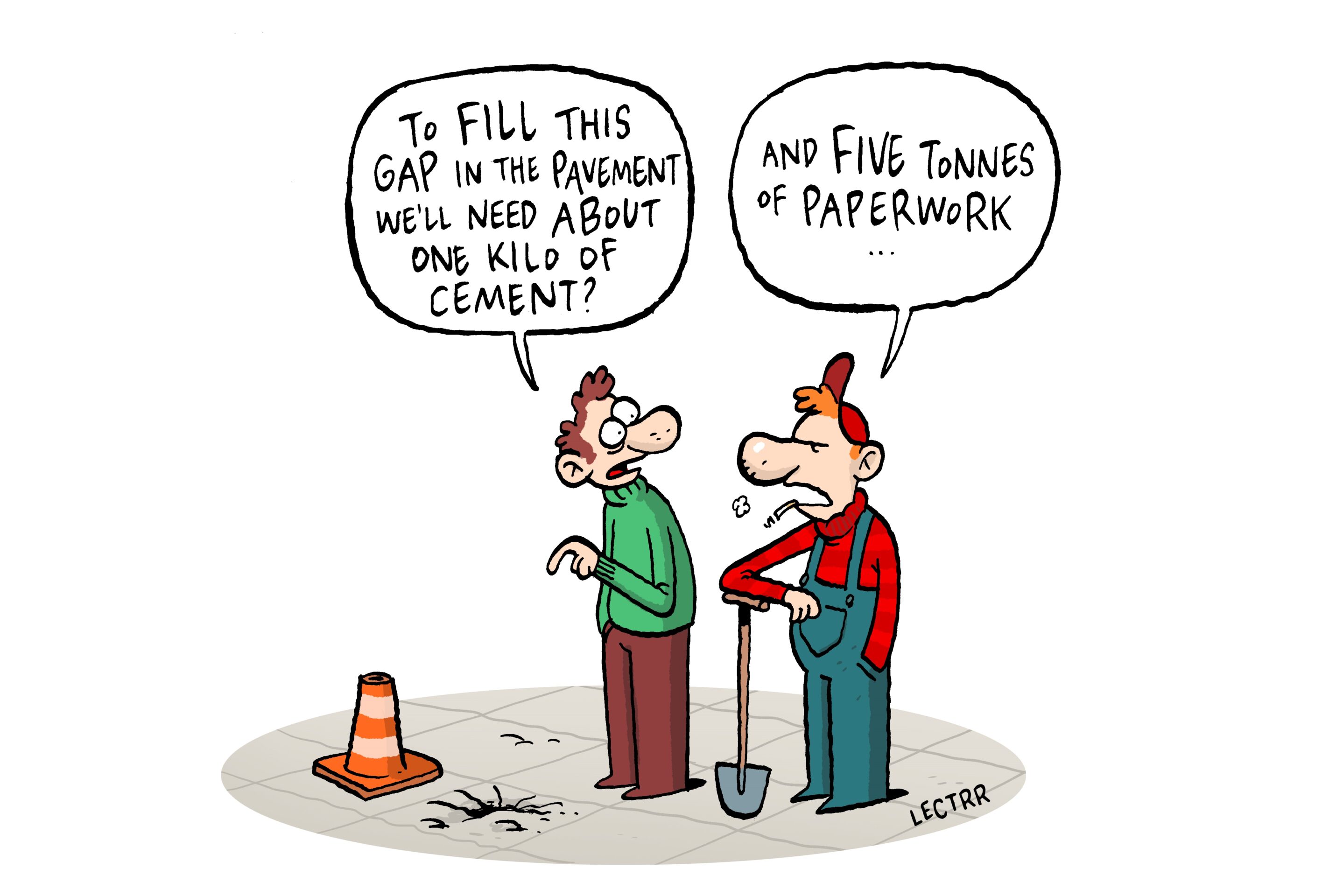
One of the most persistent misunderstandings we encounter is the idea that insurance is a stagnant, bureaucratic "dead-end" for creative or tech-savvy individuals. This couldn't be further from the truth. The "aha" moment for most people comes when they realize that insurance companies are, at their core, some of the world’s most sophisticated data and technology firms.
The myth suggests that a career here involves mindless filing and repetitive phone calls. In reality, modern auto insurance is a leader in "Insurtech." We are seeing companies deploy drones for accident scene reconstruction, use machine learning to predict fraud before it happens, and utilize telematics to reward safe drivers in real-time. If you enjoy problem-solving at scale, the complexity of managing risk for millions of drivers offers a mental challenge that few other industries can match.
There is a deep ethical component that is often overlooked. When a major natural disaster hits or a multi-car pileup occurs, the insurance team is the financial first responder. There is a profound sense of purpose in helping a family get back on the road after a total loss. It is a career that requires high emotional intelligence (EQ) as much as it requires a high IQ.
The Anatomy of Claims: Where the Rubber Meets the Road
If the insurance company is a body, the claims department is its hands. This is where the promise made in a policy is actually delivered. For many entering the field, a claims adjuster role is the most common starting point. But don't let the "entry-level" tag fool you; this is a role that demands a unique blend of investigative skill and negotiation prowess.
When we look at the day-to-day life of an adjuster, it’s rarely spent entirely behind a desk. Field adjusters are out in the world, inspecting vehicles at body shops and meeting with claimants. They have to understand the mechanics of a car—knowing the difference between a simple paint scratch and structural frame damage—while also navigating the legalities of liability. Who was at fault? What do the police reports say? Is the witness testimony consistent with the physical evidence?
Our research into the sector shows that the claims side of the house is also the best training ground for leadership. You learn how to handle conflict, how to manage a budget, and how to make firm decisions under pressure. It is a high-stakes environment where your ability to remain calm and objective is your greatest asset.
Underwriting and the Science of Risk Selection
While claims deals with what has happened, underwriting focuses on what might happen. Underwriters are the gatekeepers of the insurance company. They evaluate applications and determine whether a specific driver or fleet is a risk the company is willing to take, and at what price.
In the past, this was a manual process of checking boxes. Today, it is a sophisticated dance with data. Underwriters work closely with actuarial teams to interpret trends. For instance, if data shows that a specific make and model of car is becoming a frequent target for theft in a particular zip code, the underwriter must adjust the company's strategy accordingly.
We often describe underwriting as a "detective of the future." You aren't just looking at a driver's past accidents; you are looking at their credit-based insurance score, the safety features of their vehicle, and even broader economic trends. It requires a disciplined mind that can spot patterns in the noise. For those who enjoy analysis and strategy over direct field work, this is often the preferred path.
The Actuarial Powerhouse: The Math Behind the Premium
Actuaries are the architects of the insurance world. If you have a passion for mathematics, statistics, and probability, this is one of the most prestigious and well-compensated roles in the industry. Actuaries use complex models to ensure that the premiums collected today will be enough to pay for the claims of tomorrow.
This isn't just about plugging numbers into a spreadsheet. Actuaries have to account for "Black Swan" events—unforeseeable catastrophes that could bankrupt a less-prepared firm. They look at the rising costs of medical care, the increasing complexity of car repairs, and even how climate change might affect driving patterns.
Because the path to becoming a fully credentialed actuary involves a series of rigorous exams, the barriers to entry are high. However, the reward is a career with immense job security and influence. When we analyze the long-term viability of Is Auto Insurance a Good Career Choice in 2026?, the role of the actuary stands out as a pillar of stability, regardless of how the economy fluctuates.
The Digital Transformation: Tech Roles in Auto Insurance
As we've mentioned, the industry is currently a massive employer of software engineers, data scientists, and UX designers. The "customer journey" in auto insurance has moved almost entirely to mobile apps. Customers want to take a photo of their damaged car and receive an estimate within minutes. Building the infrastructure to make that happen is a Herculean task.
We are seeing a surge in demand for developers who can integrate AI into the claims process. Imagine an algorithm that can instantly identify the year, make, and model of a car from a grainy photo and cross-reference it with a parts database to generate a repair quote. That is the current frontier of auto insurance careers.
Telematics—the "black box" technology that monitors driving habits—is creating a wealth of data that needs to be managed and secured. This has led to a boom in cybersecurity roles within insurance firms. Protecting the personal and behavioral data of millions of drivers is a top priority, making the insurance sector a primary destination for security experts.
Navigating the Hiring Process and Corporate Culture
Every insurance company has its own "flavor" or corporate culture. Some are massive, global entities where you might feel like a small cog in a very large machine, while others are regional or mutual companies that focus heavily on community and long-term relationships.
For example, looking into the Auto Owners Insurance Group Careers and Hiring Process reveals a company that prides itself on a "No Problem" attitude and a commitment to independent agents. Their hiring process often emphasizes cultural fit and a commitment to service as much as it does technical skill. We've found that these mid-sized to large mutual companies often offer better work-life balance and "promote-from-within" mentalities than some of the high-pressure, publicly traded giants.
When applying, it is helpful to remember that the industry values certifications. Whether it's a CPCU (Chartered Property Casualty Underwriter) designation or specific claims handling licenses, showing a commitment to continuing education is a major "green flag" for recruiters.
A Comparison of Core Career Paths
To help you visualize the different trajectories, we have compiled a breakdown of the primary functions within a standard carrier.
| Role Category | Primary Objective | Key Skillset | Typical Environment |
|---|---|---|---|
| Claims Adjuster | Investigate and settle losses | Negotiation, Empathy, Investigation | Hybrid (Office & Field) |
| Underwriter | Evaluate and price risk | Analytical thinking, Decision making | Office / Remote |
| Actuary | Statistical modeling and pricing | Advanced Math, Statistics, Coding | Corporate HQ |
| Insurance Agent | Sales and client advisory | Communication, Networking, Sales | Agency Office / Remote |
| Data Scientist | Predictive modeling and AI | Python, R, Machine Learning | Tech Hub / Remote |
The Specialized World of Fraud Investigation
One of the most exciting, yet least discussed, areas of auto insurance careers is the Special Investigations Unit (SIU). Insurance fraud costs the industry billions of dollars every year, and it’s the job of the SIU to stop it. These professionals are essentially the private detectives of the insurance world.
We have spoken with investigators who have uncovered massive "staged accident" rings where criminals purposefully crash cars to collect insurance payouts. This role requires a background in law enforcement or private investigation. You have to be comfortable conducting surveillance, interviewing suspicious parties, and working closely with local police and the National Insurance Crime Bureau.
It is a role that offers a lot of variety. One day you might be reviewing medical records to see if a neck injury is being exaggerated, and the next you might be inspecting a vehicle that was allegedly "stolen" but shows signs of being dumped by the owner. For those who want a career with a bit of an edge, the SIU is a fantastic option.
Education, Certifications, and Breaking In
While many roles in the industry require a four-year degree, the specific major is often less important than the skills you bring to the table. We’ve seen successful adjusters who majored in History, and underwriters who came from a background in Finance. The industry is surprisingly open to career-changers because the core skills—critical thinking, clear communication, and ethical judgment—are universal.
However, once you are in, the learning never stops. The insurance world is heavily regulated, and staying compliant is a full-time job. According to research from the Guardian, the insurance sector is one of the top providers of paid professional development. Most companies will pay for your licenses and encourage you to pursue advanced designations.
If you are looking to enter the field, we recommend focusing on your "soft skills" during the interview. Can you explain a complex topic to someone who isn't an expert? Can you stay calm when someone is yelling at you over the phone? These are the traits that often determine long-term success in the industry.
The Impact of Autonomous Vehicles and the Future
We cannot talk about the future of this field without addressing the elephant in the room: self-driving cars. There is a common fear that if cars don't crash, we won't need auto insurance. But our analysis suggests a different outcome. Liability will simply shift from the driver to the manufacturer or the software developer.
This shift will create entirely new categories of auto insurance careers. We will need "Product Liability Underwriters" who understand the failure rates of lidar systems. We will need "Cyber Risk Adjusters" who can determine if a crash was caused by a mechanical failure or a remote hack. The industry isn't shrinking; it is evolving into something more complex and specialized.
As noted in reports by Bloomberg, the way we categorize and price risk is tied deeply to socio-economic factors, and the future of the industry will involve a heavy focus on making these processes more equitable and transparent.
Why Stability is the Ultimate Perk
In an era of "disruption" and "pivoting," there is something to be said for an industry that has existed for over a century and shows no signs of disappearing. People will always need to move from point A to point B, and as long as they do, there will be risk.
Auto insurance is often described as "recession-proof." While people might stop buying luxury goods during a downturn, they rarely stop insuring their cars—often because the law requires it. This provides a level of job security that is hard to find in Silicon Valley or the retail sector. We have seen that even during the most turbulent economic times, insurance companies continue to hire and promote.
But beyond the paycheck, there is the benefit of a structured career path. Most major carriers have very clear "ladders." You know exactly what you need to do to move from a Level I Adjuster to a Level III Senior Adjuster, or from a Junior Underwriter to a Territory Manager. For those who value clarity and a predictable growth trajectory, this is a major draw.
The Human Element in a Tech-Driven World
Despite all the talk of AI and drones, the heart of the industry remains human. We often tell people that you aren't just insuring a car; you are insuring a person's livelihood. For a single parent, their car is the only way to get to work and get their kids to school. When that car is gone, their world stops.
Being the person who says, "Don't worry, we're going to get this fixed, and here is your rental car in the meantime," is a powerful thing. We have observed that the most fulfilled people in auto insurance careers are those who never lose sight of that human connection. They use the technology as a tool to be faster and more accurate, but they provide the empathy that a machine never can.
This is why "Customer Experience" (CX) roles are becoming so vital. Companies are realizing that in a world where everyone has an app, the way you treat people during their "moment of truth" (the claim) is the only real way to differentiate yourself from the competition.
Is This the Right Path for You?
As we've navigated the depths of this industry, it’s clear that it isn't for everyone. It requires a thick skin, a love for detail, and the ability to work within a highly regulated framework. You have to be comfortable with the fact that you are working in an industry that many people only interact with when something bad has happened.
But if you are looking for a career that offers a blend of stability, intellectual challenge, and the chance to help people, it is a field well worth considering. We have seen people build 40-year careers in insurance, moving through five or six different departments and never getting bored.
The variety is truly staggering. You could start in sales, move into claims, transition to fraud investigation, and end your career in corporate compliance. Very few industries offer that kind of internal mobility.
Frequently Asked Questions
Do I need a specific degree to start a career in auto insurance?
Not necessarily. While a bachelor's degree is often preferred for corporate roles, many companies value experience and soft skills. Degrees in business, finance, or communications are common, but diverse backgrounds are welcomed.
Are auto insurance jobs being replaced by AI?
AI is changing how the work is done, but it isn't replacing the need for human judgment. AI handles the routine, data-heavy tasks, allowing humans to focus on complex negotiations, ethical decisions, and customer service.
What is the typical starting salary for an auto insurance adjuster?
Starting salaries vary by region, but they are generally competitive with other entry-level professional roles. Most companies also offer robust benefits packages, including health insurance, 401(k) matching, and tuition reimbursement.
Is it possible to work remotely in this industry?

Yes, many underwriting, actuarial, and customer service roles have transitioned to remote or hybrid models. Field claims adjusters, however, still need to be "on the ground" to inspect vehicles and accident scenes.
How do I get my insurance license?
Licensing requirements vary by state. Typically, you must complete a pre-licensing course and pass a state exam. Many large insurance companies will hire you first and then pay for your training and licensing.
The world of auto insurance is far more than just a monthly premium and a plastic card in your glove box. It is a vast, complex ecosystem that keeps society moving safely. Whether you are a math whiz, a tech enthusiast, or a natural-born helper, there is a place for you in this enduring industry. As we look toward 2026 and the era of the connected vehicle, the opportunities are only going to grow more interesting.
How is artificial intelligence reshaping the day-to-day work of insurance professionals?
Artificial Intelligence (AI) is transforming the industry from a reactive model to a proactive one. For claims adjusters, AI-powered tools can now analyze photos of vehicle damage in seconds, providing a preliminary estimate that the adjuster then reviews and finalizes. This significantly reduces the time spent on administrative tasks and allows professionals to focus on the human element of the claim, such as negotiating with repair shops or assisting stressed policyholders. In underwriting, AI helps process massive datasets to identify risk patterns that were previously undetectable,
Allowing for more precise risk profiling and fairer premiums for drivers who practice safe habits. This shift doesn't replace the underwriter but rather elevates their role to that of a high-level strategist who manages complex portfolios and fine-tunes the algorithms to ensure they align with the company's risk appetite and regulatory standards.
What level of education is typically required for a career in auto insurance?
For most professional roles such as underwriting, claims adjusting, and corporate management, a bachelor’s degree is the standard entry requirement. While degrees in finance, mathematics, or business are traditionally preferred, the industry is increasingly welcoming to graduates from diverse backgrounds. For instance, a communications or psychology degree can be incredibly beneficial for claims adjusters who must navigate sensitive human interactions, while criminal justice majors often excel in Special Investigative Units (SIU) focusing on fraud detection. Some entry-level customer service or administrative roles may only require a high school diploma or an associate degree, offering a pathway to move up within the company as you gain experience and certifications.
Can I move between different departments within an insurance company?
One of the greatest advantages of the insurance industry is its internal mobility. It is very common for professionals to start in a foundational role, like claims or customer service, and then transition into specialized areas such as marketing, human resources, or even product development. Because insurance companies are large organizations with varied needs, they often encourage "cross-pollination" of talent. If you have a background in claims, you possess a deep understanding of the customer experience, which makes you a valuable asset to the product team designing new policy features or the legal team managing litigation.
How will the rise of self-driving cars affect insurance jobs?
While autonomous vehicle technology may eventually reduce the frequency of accidents, it is expected to increase the complexity of insurance work rather than eliminate it. As the focus shifts from driver error to product liability or software failure, the industry will need a new breed of "technical adjusters" and "tech-focused underwriters." These professionals will need to understand sensor data, software updates, and the legal nuances of manufacturer versus operator liability. Far from making the industry obsolete, self-driving technology is creating a demand for more specialized expertise and higher-level analytical skills.
What is telematics, and how is it creating new career paths?
Telematics involves using GPS and onboard diagnostics to track driving behavior, such as speed, braking patterns, and mileage. This data-driven approach to insurance has opened up entirely new career paths for data scientists, mobile app developers, and behavioral analysts. Companies need experts who can not only build the technology that collects this data but also interpret the massive datasets to create "Usage-Based Insurance" (UBI) models. If you enjoy working at the intersection of technology and human behavior, the telematics sector of auto insurance offers some of the most innovative roles in the market today.
What are the most important soft skills for success in this field?
While technical knowledge is important, soft skills are often what define a successful career in insurance. Empathy is at the top of the list; when a policyholder calls to report an accident, they are often stressed or traumatized, and they need a professional who can listen and provide calm guidance. Critical thinking and problem-solving are also essential, as no two claims or risk profiles are exactly alike. Finally, strong communication skills—both written and verbal—are vital for explaining complex policy terms to customers or negotiating settlements with repair shops and legal counsel.
Is the auto insurance industry recession-proof?
While no industry is entirely immune to economic shifts, auto insurance is considered one of the most stable career paths available. Because most states and countries require drivers to carry insurance by law, it is a non-discretionary expense for the average person. Even during economic downturns, people continue to drive to work, school, and grocery stores, meaning they must maintain their coverage. This steady demand provides a level of job security that is hard to find in more volatile sectors like luxury retail or high-end real estate, making it an excellent choice for those seeking long-term professional stability.


Comments
Post a Comment